Article: End Grain vs. Edge Grain Cutting Boards: What’s the Difference?
End Grain vs. Edge Grain Cutting Boards: What’s the Difference?
Deciding to buy a wooden cutting board is a big step, and with great buying power comes great responsibility. Just kidding...buying a cutting board should be fun!
If you've started shopping for a wooden cutting board, you've probably come across two terms: edge grain and end grain. So what's the difference, and which one is better?
The short answer: End grain cutting boards are generally gentler on knives, heavier, and more resistant to visible knife marks. Edge grain cutting boards are lighter, more affordable, and easier to maintain. Neither is universally “better”—the right choice depends on how you cook and what you want from your cutting board.
TL;DR: Edge Grain vs. End Grain Cutting Boards
| Feature | Edge Grain Cutting Boards | End Grain Cutting Boards |
|---|---|---|
| Wood Orientation | Horizontal (side grain) | Vertical (end grain) |
| Appearance | Striped grain | Checkerboard or brick pattern |
| Knife-Friendliness | Very good | Excellent |
| Knife Marks | More visible | Less visible |
| Durability | Durable | Extremely durable |
| Weight | Lighter | Heavier |
| Maintenance | Lower maintenance | Higher maintenance |
| Price Point | More affordable | More expensive |
| Best For | Everyday cooking and serving | Heavy chopping and serious cooks |
| Best Choice If... | You want versatility, lighter weight, and easy maintenance | You prioritize stability, durability, and knife-friendliness |
What is an Edge Grain Cutting Board?

Edge grain cutting boards, also known as side grain or long grain cutting boards, are made by bonding together carefully selected strips of wood with the grain running horizontally along the surface. The result is a sleek, striped look that highlights the natural beauty of the wood grain.
Because the grain runs horizontally across the cutting surface, your knife is cutting across the wood fibers rather than between the ends of them. That makes edge grain a little less forgiving on knife edges than end grain, but it's still an excellent choice for everyday cooking.
Edge grain boards are also lighter, more affordable, and generally require less maintenance than end grain boards, making them a great choice for everyday home cooks.

Benefits of Edge Grain Cutting Boards
Durable: Lasts years longer than plastic and bamboo.
Low maintenance: Requires less frequent oiling.
Stain resistant: Less susceptible to moisture, which can lead to staining.
More affordable: Edge grain cutting boards require less labor to make.
Lighter: Their lighter weight makes them easier to move from the kitchen counter to the dining table, making them especially useful as serving boards.
Visually striking: This type of cut reveals the wood's beauty by showing off long, uninterrupted grain patterns.
Cons of Edge Grain Cutting Boards
More susceptible to knife marks: All wood cutting boards will show knife marks. However, knife marks are more visible on edge grain boards than end grain boards.
Slightly less gentle on knives: Because your knife cuts across the wood fibers, edge grain isn't quite as forgiving to your knife edge as end grain. That said, it's still significantly more knife-friendly than harder surfaces such as glass.
What are Edge Grain Cutting Boards Ideal For?
Edge grain is a great choice if you want one versatile board that can handle everyday kitchen tasks while still looking beautiful enough to use for serving.
- Everyday, light-to-medium chopping and prep.
- Preparing fruits and vegetables, including juicy produce like watermelon, pineapple, and citrus.
- Carving and slicing meat.
- Making and rolling out dough for pizza, pasta, and pies.
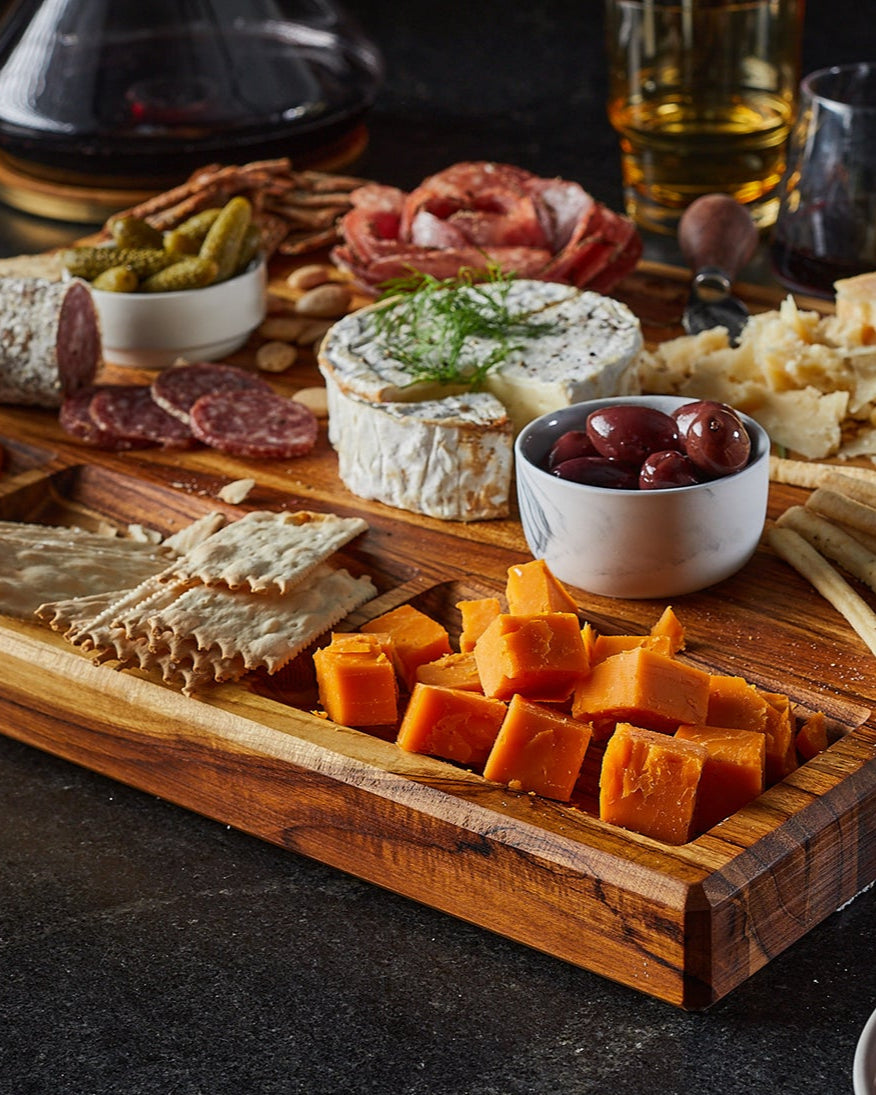
- Serving cheese, charcuterie, appetizers, and other foods when the grocery store deli tray won't cut it anymore.
Shop our edge grain cutting boards
What is an End Grain Cutting Board?

An end grain cutting board, also known as an end cut or end block cutting board, is made by arranging pieces of wood so that the ends of the wood fibers face upward toward the cutting surface.
This creates the distinctive checkerboard or brick-like pattern you see on many traditional butcher blocks. More importantly, it changes how your knife interacts with the wood.
When you cut into an end grain board, the knife edge moves between the ends of the wood fibers rather than cutting directly across them. The fibers can close around small knife cuts, which helps make knife marks less pronounced and makes end grain particularly gentle on knives.
The result is a substantial, stable cutting surface that's especially popular with professional chefs, serious home cooks, and anyone who spends a lot of time chopping.

Benefits of End Grain Cutting Boards
Durable: Can withstand heavy-duty carving and chopping. Did someone say brisket?
Gentler on knives: Each knife cut goes between the wood fibers, rather than through them, also making these boards more resistant to scratches and knife marks.
Self-healing: These fibers close back up after the knife exits, keeping your knife's edge sharper for longer.
Heavier: Compared to edge grain, these boards weigh more, which means less movement while you're dicing away.
Visually striking: This type of cut reveals the unique character of the wood rings and grain details, something you won't find in edge grain cutting boards.
Cons of End Grain Cutting Boards
Requires a little extra TLC: End grain cutting boards tend to be thirstier than edge grain boards and require more frequent oiling.
More expensive: End grain boards typically cost more due to the complexity and time needed to craft them.
Heavier: Weighs more than edge grain boards, and may come as a shock if you're used to plastic or bamboo boards.
What Are End Grain Cutting Boards Ideal For?
End grain is a great choice if you do a lot of chopping, carving, or other heavy-duty prep and want a cutting surface that's especially gentle on your knives.
- Heavy chopping and frequent food prep.
- Breaking down large cuts of meat.
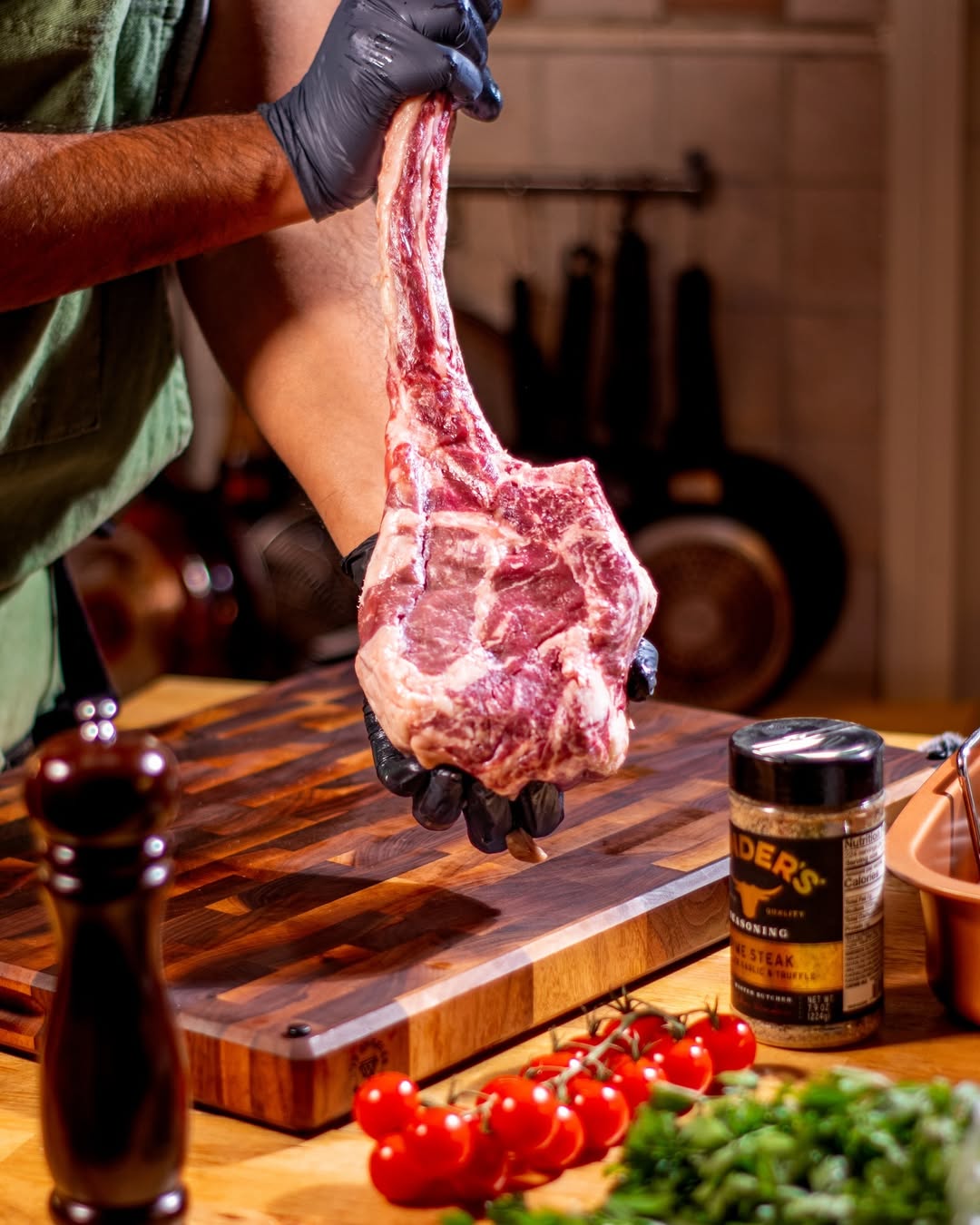
- Carving brisket, turkey, ham, ribs, pot roast, and other large cuts of meat.
- Frequent use with professional or high-end knives.
- Anyone looking for a substantial, long-lasting cutting board that can become a staple of their kitchen.
Shop our end grain cutting boards
So, Which Cutting Board Should You Buy?
If you're still not sure whether edge grain or end grain is right for you, think about how you'll actually use your board.
Choose an edge grain cutting board if:
- You want a versatile board for everyday cooking.
- You frequently use your cutting board for serving.
- You want something lighter and easier to move.
- You prefer a lower-maintenance option.
- You want to spend less while still getting the benefits of a quality wood cutting board.
Choose an end grain cutting board if:
- You do a lot of heavy chopping or carving.
- Protecting your knife edges is a priority.
- You want a very stable, substantial cutting surface.
- You don't mind giving your board a little extra maintenance.
- You're looking for a long-term investment piece for your kitchen.
And if you're still torn? There's no rule saying you can only own one. Many home cooks use an edge grain board for everyday prep and serving, while keeping an end grain board nearby for heavier chopping and carving.
Find your board
Caring for Your Wood Cutting Board (Yes, You Gotta Oil It)
No matter which style you choose, wood cutting boards require some TLC. Here's the short version:
- Oil regularly: Use a food-safe mineral oil to hydrate and protect the wood. For best results, we recommend oiling your board every 2–3 weeks, or whenever the wood starts to look or feel dry.
- Keep it dry: Never soak your board or put it in the dishwasher.
- Clean gently: Hand wash with mild soap and warm water after each use, then towel dry immediately and allow the board to finish air-drying upright.
- Don't neglect the finish: Regular oiling helps keep the wood conditioned and reduces the risk of drying, cracking, and other problems caused by moisture loss.
Want the full details? Check out our Cutting Board Care Guide.
Frequently Asked Questions About Edge Grain and End Grain Cutting Boards
Is end grain better than edge grain?
Not necessarily. End grain is generally better for heavy chopping, knife-friendliness, and stability, while edge grain is lighter, more affordable, and easier to maintain. The best choice depends on how you plan to use your cutting board.
Which is better for knives, end grain or edge grain?
End grain is generally gentler on knives because the knife moves between the ends of the wood fibers rather than cutting directly across them. Edge grain is still a knife-friendly choice and is considerably better for your knives than hard surfaces such as glass.
Are end grain cutting boards harder to maintain?
They require a little more maintenance than edge grain boards. End grain tends to absorb more oil, so it may need to be conditioned more frequently. Both types should be hand washed, dried promptly, and never placed in the dishwasher.
Why are end grain cutting boards more expensive?
End grain boards require additional steps to manufacture because the wood must be cut, arranged, and bonded so the ends of the fibers face upward. That additional labor and craftsmanship generally makes end grain boards more expensive than edge grain boards.
Do end grain cutting boards last longer?
A high-quality end grain cutting board can last for many years with proper care. However, longevity depends on the quality of the wood, construction, finish, and how the board is maintained. Both edge grain and end grain boards can be long-lasting kitchen tools when properly cared for.
Can you use an edge grain cutting board for meat?
Absolutely. Edge grain cutting boards are suitable for preparing and carving meat. Just be sure to clean the board thoroughly with warm, soapy water after use and dry it promptly.
What is the best cutting board for everyday cooking?
For many home cooks, an edge grain cutting board is an excellent everyday option because it offers a combination of durability, knife-friendliness, lighter weight, and relatively low maintenance. If you do a lot of heavy chopping or want maximum stability, an end grain board may be the better choice.
The Bottom Line
There isn't one “best” type of wood cutting board for everyone. Edge grain boards are versatile, lightweight, and easy to maintain, while end grain boards offer exceptional stability, durability, and knife-friendliness.
The best cutting board is ultimately the one that fits the way you cook.
Whether you're looking for an everyday workhorse, a beautiful serving piece, or a substantial board for serious chopping, Sonder LA makes both edge grain and end grain cutting boards designed to become a part of your kitchen for years to come.