Cutting Board Oil vs. Conditioner: Which is Best For Board Care?
Cutting board oil and conditioner serve different purposes: oil penetrates the wood, while a wax-containing conditioner adds surface protection. Which should you use? The best answer is BOTH and we'll explain the difference.
We’ve all been there. You’re prepping dinner for the hundredth time on the plastic cutting board you found on a random end cap, when you realize the time has come to upgrade your kitchen. After all, you’ve been looking for the chance to put the ‘treat yo' self’ mantra into action, so what better way than to invest in a quality wood cutting board?
As with all investment pieces, you want to make sure that the handsome little devil you just brought home will stay handsome and, more importantly, useful for as long as possible. There are many products out there, but before we dig into which is best and what to look for, it’s helpful to know why a wood cutting board needs to be maintained in the first place.
Cutting Board Oil vs. Conditioner: At a Glance
| Care product | Main purpose | When to use it |
|---|---|---|
| Cutting board oil | Penetrates and conditions the wood. | When the board needs oiling, following the board and care-product instructions. |
| Wax-containing conditioner | Adds a protective surface layer. | After fully oiling, for extra protection. |
| Oil-and-wax blend | Combines oil and wax in one formula. | As directed on the label; application varies by formulation. |
TL;DR: Proper Board Care Tips
-
Choose products intended for food-contact wood surfaces. Check ingredients and application instructions, not just the product name.
-
Oil and wax do different jobs. Food-grade mineral oil conditions the wood; wax adds surface protection.
-
A combined oil-and-wax product can simplify care. Follow its label rather than assuming every formula works the same way. Always opt for a more liquid formula over solid wax, if just using 1 product.
-
Adjust your care routine to your board. Usage, washing, wood type, and your environment affect how often it needs attention.
-
Avoid cooking oils for routine board treatment. Olive, vegetable, canola, and sesame oils can become rancid.
Understanding the Importance of Cutting Board Care
Wood responds to moisture and changes in its environment. Regular care helps keep your cutting board in good condition, especially with frequent washing or use in a dry climate. Think of it as a simple kitchen habit, not a complicated project. Start with the instructions for your particular board.
The Best Products for Wood Cutting Board Care
Seasoning, butter, cream, and conditioner are product names, not standardized ingredient lists. To understand what a care product does, check whether it contains oil, wax, or both.
Food-Grade Mineral Oil (Cutting Board Oil)
Food-grade mineral oil is a common choice for wood cutting board care. It is colorless, odorless, and tasteless. Choose a product labeled for use on food-contact wood surfaces and follow the application directions.
Pro Tip: Cutting board oil is not always mineral oil. Read the ingredients before choosing a product.
Fractionated Coconut Oil (Cutting Board Oil)
Some board-care products use fractionated coconut oil. Do not assume that ordinary cooking coconut oil is interchangeable with a formulated board-care product. Check that the product is intended for cutting boards and follow its label.
Beeswax and Carnauba Wax (Cutting Board Conditioner)
Wax-containing conditioners add a protective surface layer. Some formulas contain beeswax, carnauba wax, or a blend of waxes and oils. The ingredients matter more than whether the label calls the product butter, cream, or conditioner.
Pro Tip: A wax-only product is not the same as an oil-and-wax blend. Follow the manufacturer’s directions for whether separate oiling is needed.
How Often Should I Oil My Wood Cutting Board?
Check your board regularly and follow its manufacturer’s recommended schedule. A board used and washed frequently may need attention sooner than one used occasionally. If the wood looks or feels dry, review your care routine rather than relying on a calendar alone.
-
Start with a clean, completely dry board.
-
Apply a suitable cutting board oil according to its label, covering the surfaces specified in your board’s care instructions.
-
Allow the recommended absorption time, then remove excess oil as directed.
-
If using a separate wax-containing conditioner, apply it after oiling according to the product instructions. For a combined formula, follow that product’s directions.
Follow the Sonder LA cutting board care guide for your board’s ongoing care routine.
Does Wood Type or Grain Construction Affect Care?
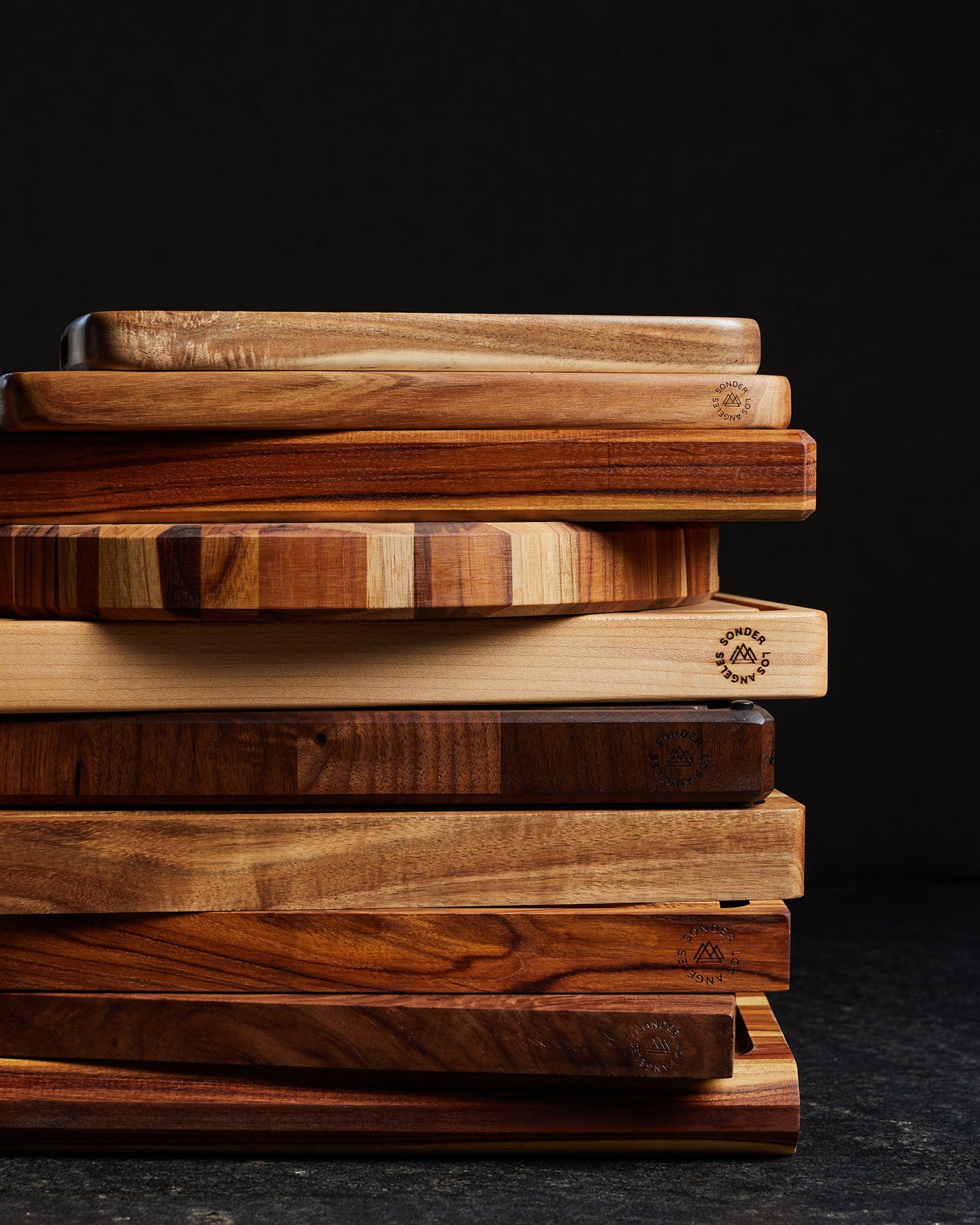
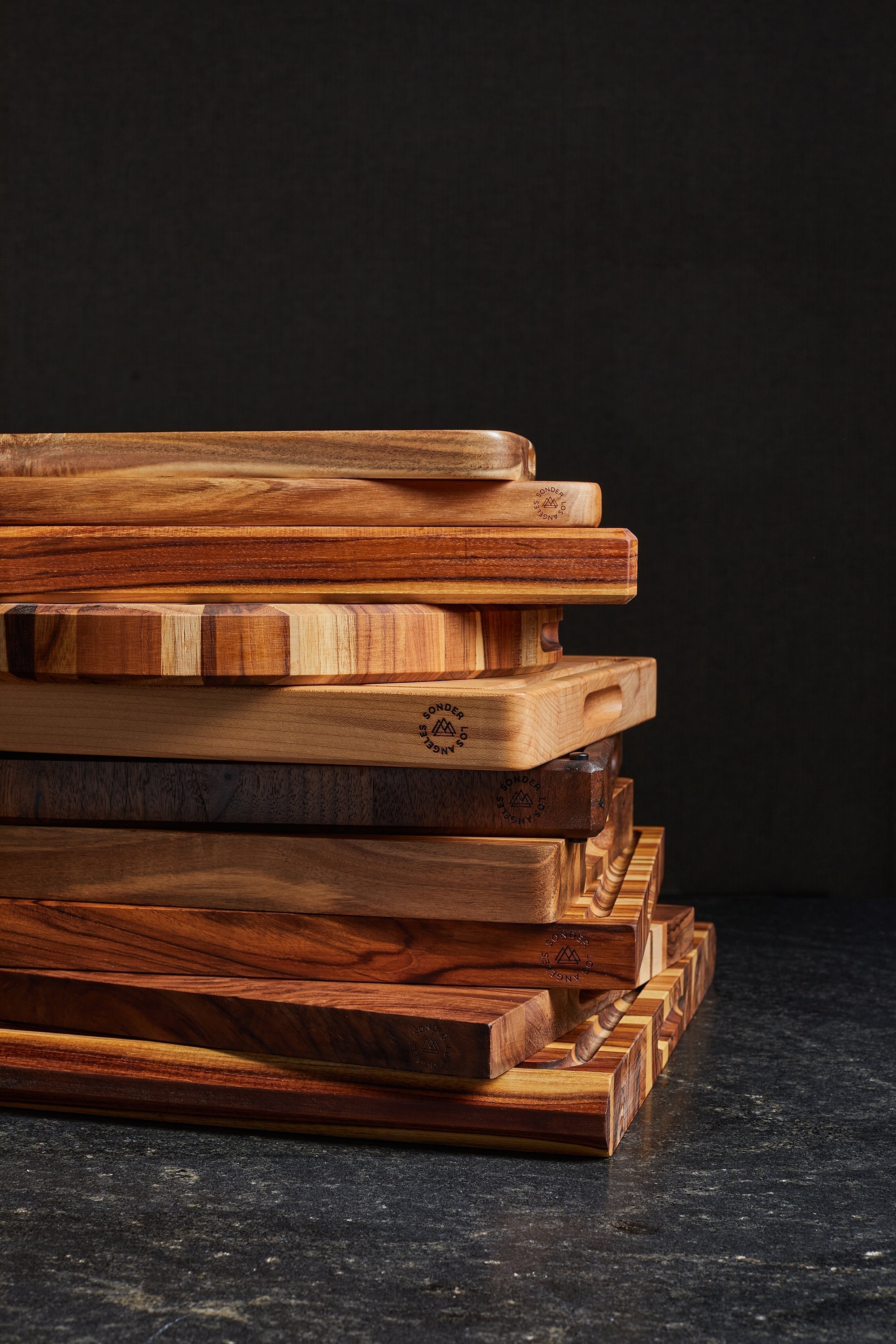
Your board’s wood type and construction are worth considering alongside how you use and wash it. Learn about end-grain vs. edge-grain cutting boards, and use the care instructions for your specific board rather than assuming every wood board needs the same schedule.
How to Clean Your Wood Cutting Board
Cleaning and conditioning are separate tasks. Oil and wax are care products, not substitutes for cleaning. Before treating stains or odors with vinegar, baking soda, or lemon and salt, check which methods your board manufacturer recommends. Do not rely on a home stain-removal treatment as a sanitizing step.
For cleaning instructions and answers to common care questions, read our wood cutting board care guide.
Oils to Avoid Using on Your Wood Cutting Board
For routine board treatment, avoid these cooking oils:
- Olive oil
- Vegetable oil
- Canola oil
- Sesame oil
These oils can oxidize and become rancid, leaving an unpleasant smell. Instead, choose a care product intended for food-contact wood surfaces.
This advice concerns treating the board, not incidental contact with cooking oils during food preparation.
Choose Your Next Wood Cutting Board
Now that you know the difference between oil and conditioner, you can choose your next board with a clearer picture of its care routine. Explore our maple cutting boards or browse our end-grain cutting boards. They require the most maintenance and frequent oiling and waxing, but are also some of our most premium pieces. Compare each board’s dimensions, construction, and care instructions to find the right fit for your kitchen. You can also take our Find Your Board Quiz to help select the perfect piece for your needs.
Frequently Asked Questions
Do I need both cutting board oil and conditioner?
Not necessarily as separate products. Some conditioners combine oil and wax which work great for Acacia and Teak boards. Check the ingredients and follow your board's care instructions. For drier woods like Maple and Walnut, adding a wax is always recommended.
Do I apply cutting board oil or conditioner first?
When using separate products, apply oil first and after that dries, a wax-containing conditioner afterward, following each product’s directions. A combined oil-and-wax formula may have different instructions.
Is board butter the same as cutting board conditioner?
Board butter often refers to an oil-and-wax care product, but names vary between brands. Compare the ingredient lists and intended uses rather than relying on the name alone. If you're only using one product, make sure it's a more liquid formula, so it can really soak in and penetrate the wood.
How often should I oil my wood cutting board?
You can't overdo it, so the more the better! At least every 2 weeks for end-grain walnut and maple, while closer to 3 weeks is fine for acacia and teak. Washing frequency, usage, and the environment can affect how often it needs oiling.
Can I use olive oil to treat a cutting board?
Avoid olive oil as a routine board treatment because it can become rancid. Choose a product specifically intended for food-contact wood surfaces instead.